
Future technology trends are moving faster than ever, and the next few years could bring major changes to the way people work, communicate, travel, and use digital services.
Here are seven technology trends that could have a major impact as we move toward 2027.
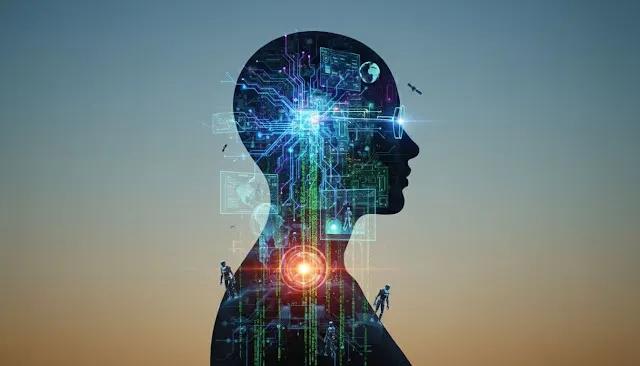
1. AI Will Become Part of More Everyday Technology
Artificial intelligence is no longer limited to chatbots and experimental applications. AI is increasingly being built directly into smartphones, computers, search engines, productivity software, and other everyday products.
Instead of opening a separate AI application, users may increasingly interact with AI features directly inside the tools they already use.
AI assistants could help organize information, summarize documents, create content, analyze data, and complete repetitive tasks. As these systems become more capable, the line between traditional software and AI-powered applications will continue to disappear.
2. AI Agents Could Move Beyond Simple Commands
One of the most interesting technology trends heading toward 2027 is the development of AI agents.
Traditional AI assistants generally respond to individual requests. AI agents are designed to take multiple steps toward completing a larger task.
For example, an agent could potentially research information, organize the results, create a report, and prepare it for review with limited human intervention.
Businesses are particularly interested in this technology because autonomous systems could automate complex workflows while allowing employees to focus on higher-value work.
However, security and reliability will remain major challenges. Organizations will need strong controls to make sure autonomous systems only have access to the information and tools they actually need.
3. Cybersecurity Will Become Even More Important
As more devices and services become connected, cybersecurity will become increasingly important.
AI can help security teams identify unusual activity, analyze large amounts of security data, and respond to potential threats faster. At the same time, attackers can use AI to automate scams, create convincing phishing messages, and discover vulnerabilities.
This creates a technological arms race between defenders and attackers.
Businesses and individuals will therefore need to pay more attention to identity protection, software updates, multi-factor authentication, and secure handling of personal information.
4. Smart Devices Will Become More Connected
Smartphones, computers, watches, vehicles, home appliances, and other connected devices are increasingly communicating with one another.
The next stage of this development could make these ecosystems more intelligent. Instead of simply connecting devices, software could use information from multiple devices to provide more useful and personalized experiences.
For example, a smartphone could communicate with a vehicle, smartwatch, and home system to automatically provide relevant information based on the user’s situation.
The challenge will be balancing convenience with privacy. The more connected devices become, the more important it will be to control how personal information is collected and shared.
5. More Computing Will Happen on the Device
Cloud computing has transformed modern technology, but not every task needs to send information to a remote server.
Edge computing and increasingly powerful processors are allowing more processing to happen directly on smartphones, computers, vehicles, and other devices.
This can reduce latency and potentially improve privacy because some information can be processed locally instead of being sent to the cloud.
AI is also helping accelerate this trend. Smaller AI models can run directly on modern devices, allowing users to access certain AI capabilities even when an internet connection is limited.
6. Robotics Could Become More Practical
Robotics has existed for decades, particularly in manufacturing. However, advances in AI are giving robots new capabilities.
Modern robots can increasingly use cameras, sensors, machine learning, and AI models to understand their surroundings and perform more flexible tasks.
Over time, this could lead to greater use of robots in warehouses, factories, healthcare, logistics, agriculture, and potentially homes.
The technology still faces significant challenges, including cost, safety, reliability, and the ability to operate effectively in unpredictable environments.
7. Technology Will Become More Natural to Use
Perhaps the biggest change will not be a single device or application. Instead, technology itself could become easier and more natural to interact with.
Voice interfaces, AI assistants, computer vision, wearable devices, and intelligent software are moving technology away from traditional menus and buttons.
Rather than learning how a particular application works, users may increasingly explain what they want in everyday language and let software determine the steps required to accomplish it.
This could make advanced technology accessible to more people while changing how software is designed.
What Future Technology Trends Mean for the Future
Future technology trends heading toward 2027 suggest that computing is becoming more intelligent, connected, and automated.
Artificial intelligence will likely play a major role, but it will not develop in isolation. AI will work together with cybersecurity systems, connected devices, cloud and edge computing, robotics, and new forms of human-computer interaction.
There will also be challenges. Privacy, security, misinformation, job disruption, and responsible use of AI will become increasingly important as technology becomes more powerful.
The companies and technologies that succeed will not necessarily be the ones with the most advanced features. The winners may be the products that provide useful technology while remaining secure, reliable, and simple enough for ordinary people to use.
The future of technology is already taking shape. By 2027, many of the technologies that seem new today could become normal parts of everyday life.