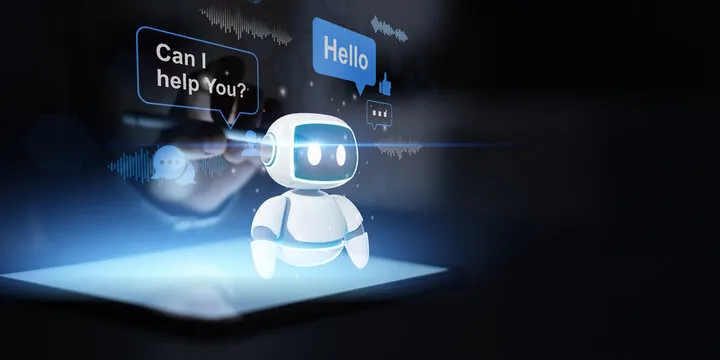
AI Is Becoming Part of Everyday Work One of the biggest areas of growth is productivity. AI assistants can help users draft emails, organize information, summarize long documents, generate ideas, and explain complicated subjects. Businesses are also experimenting with AI to automate repetitive tasks. Customer support, data analysis, content creation, software development, and internal documentation…
AI Is Becoming Part of Everyday Work
One of the biggest areas of growth is productivity. AI assistants can help users draft emails, organize information, summarize long documents, generate ideas, and explain complicated subjects.
Businesses are also experimenting with AI to automate repetitive tasks. Customer support, data analysis, content creation, software development, and internal documentation are some of the areas where AI tools are already being used.
The goal isn’t necessarily to replace every existing tool. Instead, AI can work alongside traditional software and help people complete tasks faster.
AI Assistants Are Becoming More Accessible
Another major change is accessibility. Advanced AI capabilities that once required specialized knowledge are now available through simple web and mobile applications.
Users don’t necessarily need to understand how an AI model works to benefit from it. They can simply describe a task and allow the software to generate a response or assist with the process.
This has also created a growing market for AI-powered applications, with companies competing to provide better reasoning, faster responses, improved image generation, and more useful integrations.
How AI Assistants Could Change Work
As AI assistants become more capable, they could take on a larger role in everyday workflows. Instead of simply responding to individual requests, future systems may be able to coordinate several steps, work across different applications, and help users complete longer tasks.
For businesses, this could mean AI assistants handling routine research, organizing information, preparing reports, or helping employees find answers across internal documents. Human workers would still need to review important decisions, but AI could reduce the time spent on repetitive work.
For individual users, the same technology could make everyday tasks easier. An assistant could help plan a trip, organize a schedule, compare information, or manage a collection of documents from a single interface.
The challenge will be making these systems reliable and secure. As AI assistants receive access to more information and applications, users will need greater control over what the systems can see and what actions they are allowed to take.
What This Means for Users
For everyday users, the increasing availability of AI means that computers are becoming more interactive. Instead of learning exactly which buttons to press, users can increasingly explain what they want to accomplish.
However, AI-generated information still needs to be checked. AI systems can sometimes produce incorrect or outdated information, so users should verify important facts before relying on them.
Privacy is another important consideration. Users should understand how a particular AI service handles the information they provide, especially when working with sensitive personal or business data.
AI Is Moving Beyond Simple Questions
AI assistants are also becoming capable of handling more complex workflows. Modern systems can work with text, images, audio, documents, and other types of information.
This means an AI assistant can potentially help with several connected tasks rather than simply answering one question. For example, a user might provide a document, ask the AI to analyze it, request a summary, and then ask for the information to be organized into a presentation or report.
This shift could make AI more useful in professional environments, where completing a task often involves several steps.
However, increased capability also creates new responsibilities. Users and businesses still need to consider accuracy, privacy, security, and human oversight when AI is used for important tasks.
The Future of AI
AI technology is continuing to develop rapidly, and new capabilities are likely to become available across smartphones, computers, websites, and other devices.
Google’s latest AI developments, including its push toward more agentic technology, show how quickly these capabilities are evolving.
The biggest change may not come from one specific AI application. Instead, AI could gradually become a standard feature of the software people already use every day.
As the technology develops, the most useful AI tools will likely be those that can save time, provide reliable information, and work naturally with the applications people already depend on.