
Microsoft is expanding its approach to AI security as businesses increasingly deploy AI agents, coding assistants and automated systems that can access company data and perform tasks with limited human intervention.
The company has introduced new tools and guidance designed to help organizations apply Zero Trust security principles to AI systems, including AI agents and the software development environments used to build them.
The move comes as AI systems become more capable and increasingly connected to business applications, infrastructure and sensitive information.

Microsoft Brings Zero Trust Principles to AI
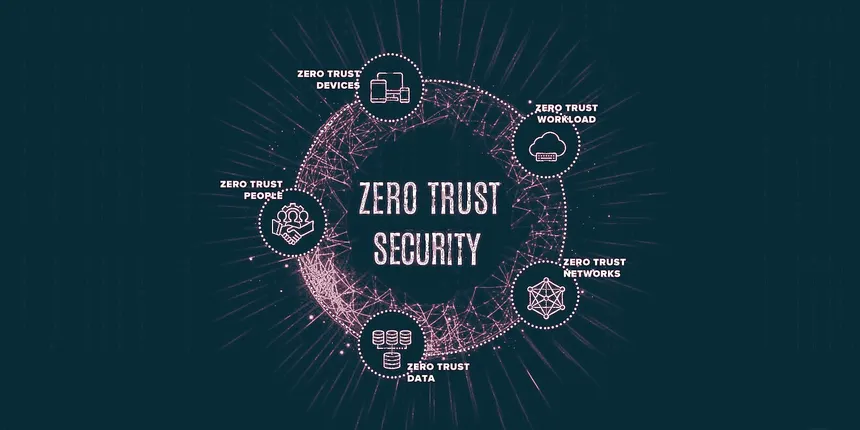
Zero Trust is based on a simple security principle: never trust, always verify.
Instead of automatically trusting users, devices or applications inside a corporate network, Zero Trust requires organizations to continuously verify identities, limit access and monitor activity.
Microsoft is now applying those principles more directly to AI systems.
According to Microsoft, its expanded Zero Trust approach includes updates to its Zero Trust Assessment tool, with dedicated areas covering AI, security operations and infrastructure.
The assessment is designed to help organizations establish a security baseline, identify weaknesses and determine where security improvements should be prioritized.
For businesses adopting AI across multiple departments, this type of structured assessment could become increasingly important as AI systems gain access to more internal resources.
AI Agents Create New Security Challenges
One of the biggest reasons AI security is becoming more important is the rapid development of AI agents.
Unlike traditional chatbots that primarily respond to questions, AI agents can be designed to interact with applications, retrieve information, execute tasks and make decisions based on instructions.
That additional capability also creates additional risk.
An AI agent with excessive permissions could potentially access information or systems that it does not actually need. If an account, application or agent is compromised, those permissions could increase the potential impact of an attack.
Microsoft’s guidance therefore emphasizes security principles such as least-privilege access.
The idea is straightforward: an AI agent should receive only the permissions required to perform its assigned task.
For example, an agent designed to summarize documents may need permission to read specific files, but it should not automatically have the ability to modify databases, change security settings or access unrelated systems.
Microsoft Adds a DevSecOps Focus
Microsoft is also expanding its Zero Trust guidance into the software development process.
The company’s updated Zero Trust Workshop includes a new DevSecOps pillar, addressing the security challenges created by modern software development and AI coding tools.
Microsoft says the new guidance contains 91 tasks across 15 control groups.
These controls address areas including source-code repositories, CI/CD pipelines and infrastructure-as-code.
The timing is significant because AI coding assistants are becoming increasingly common among developers.
AI tools can generate code, suggest fixes and automate parts of the development process. However, automatically generated code still needs to be reviewed, tested and secured.
Introducing security controls earlier in the development process can help organizations identify vulnerabilities before software reaches production.
For businesses increasingly relying on AI-assisted development, DevSecOps could become an important part of their overall AI security strategy.
AI Memory Becomes a Security Concern
Another issue highlighted by Microsoft’s approach is AI memory.
As AI systems become more personalized, some applications can retain information from previous interactions. AI agents may also need to maintain context about users, tasks or business processes.
That information can become valuable from a security and privacy perspective.
If an AI system stores sensitive company information, organizations need to understand what is being retained, where it is stored and who—or what—can access it.
Microsoft’s guidance treats AI memory as an area that requires governance rather than simply assuming that stored information is harmless.
This becomes particularly important for autonomous AI systems that may operate continuously or interact with multiple services.
Why AI Security Matters for Businesses
Businesses are moving beyond using AI simply as a productivity tool.
AI systems are increasingly being connected to customer information, internal documents, software development environments and business applications.
That means an AI system can potentially become another pathway into an organization’s digital environment.
Traditional security controls such as identity management, access controls and monitoring remain important, but organizations also need to consider how AI systems themselves behave and what they are allowed to do.
A compromised AI agent with broad access could potentially create a different type of security incident than a compromised traditional application.
This is why Microsoft’s approach focuses on integrating AI security with existing cybersecurity practices rather than treating AI as an isolated technology.

What Businesses Can Do
Organizations adopting AI do not necessarily need to completely redesign their security infrastructure.
They can begin by understanding exactly what their AI systems can access and what actions they are capable of performing.
Security teams should consider questions such as:
- What data can an AI agent access?
- What applications can it interact with?
- What permissions does it have?
- Can its actions be monitored and audited?
- What information does it retain?
- What happens if the AI system or its credentials are compromised?
Limiting permissions is particularly important.
Giving an AI system access to everything may make deployment easier, but it also increases the potential damage if something goes wrong.
Organizations should instead aim to give AI systems the minimum access required for their specific tasks while monitoring their activity.
The Next Stage of Enterprise AI Security
Microsoft’s expanded Zero Trust strategy reflects a broader change taking place across the technology industry.
As AI becomes more autonomous, cybersecurity teams will have to secure systems that don’t simply store or process information—they can increasingly act on it.
That creates new questions around identity, permissions, memory, monitoring and software development.
For businesses, the challenge will be finding the right balance between giving AI enough access to be useful while maintaining enough control to keep sensitive systems protected.
The companies that establish strong security practices early could be better positioned to adopt increasingly capable AI systems without unnecessarily increasing their cybersecurity exposure.
AI security is therefore becoming less of a future concern and more of a practical requirement for organizations deploying AI today.
Source: Microsoft — Scaling Security: How Microsoft Is Hardening the AI Frontier, August 4, 2026.