
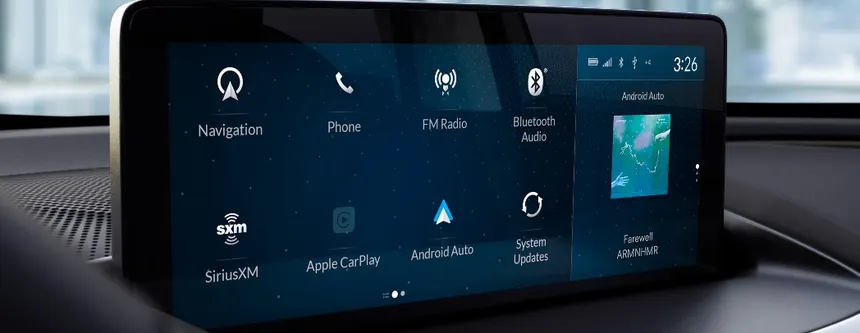
If you connect your smartphone to your car, there is a good chance you are using either Android Auto or Apple CarPlay. Both platforms bring familiar phone features to the vehicle, including navigation, music, messages, calls, and voice controls.
At first glance, the two services may seem almost identical. Both are designed to make smartphone features easier and safer to use while driving. However, the experience can be noticeably different depending on which phone you use.
The biggest differences come down to customization, app support, artificial intelligence, and how much control each platform gives the driver.
Android Auto vs Apple CarPlay: Different Approaches
Android Auto and Apple CarPlay are both designed to extend the smartphone experience onto a compatible car display.
They allow drivers to access navigation apps, music services, messages, phone calls, and other supported applications without constantly reaching for their phones.
The philosophy behind each platform is different, though.
Android Auto generally gives users more flexibility. Drivers can customize parts of the interface, adjust certain settings, and access additional options through Android’s developer settings.
Apple takes a more controlled approach with CarPlay. The interface is designed to be simple and consistent, with Apple deciding more strictly which applications and features can appear on the car’s display.
For drivers who prefer simplicity, that approach can be appealing. For people who enjoy customization, Android Auto offers more room to experiment.
Android Auto vs Apple CarPlay: Customization
One of the clearest differences is how the two platforms handle the dashboard experience.
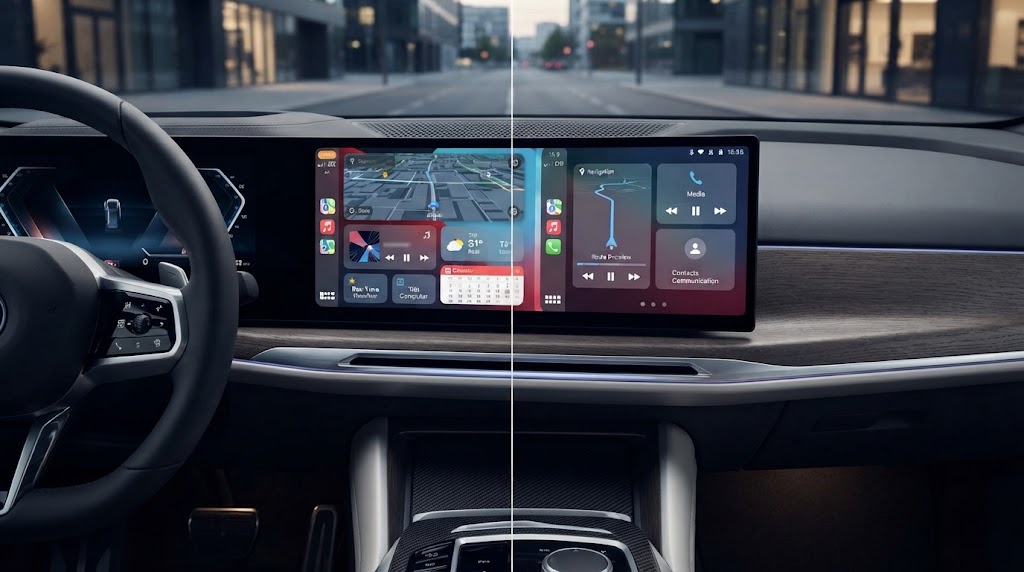
Android Auto uses a flexible interface that can display multiple types of information at once. Depending on the vehicle and version, drivers can have navigation, media controls, and other information visible without switching between completely separate screens.
Users also have more control over how certain elements are arranged.
CarPlay has become more flexible over time, including options for rearranging applications and using split-screen layouts in supported configurations. However, Apple’s approach remains more restricted than Google’s.
This difference reflects the broader philosophies of Android and iOS. Android generally gives users more control over how their devices look and behave, while Apple prioritizes consistency and simplicity.
For drivers who want to personalize their in-car experience, Android Auto currently has the advantage.
Android Auto Gives Power Users More Options
There is another difference that will matter mostly to advanced Android users.
Android Auto includes developer settings that expose additional controls that aren’t normally visible during everyday use.
These settings can provide options for troubleshooting wireless connections, adjusting certain display behaviors, and testing features that aren’t intended for the average driver.
Android’s wider ecosystem also makes it possible for experienced users to install applications outside the standard Google Play Store in some circumstances.
That flexibility can be useful, but it comes with an important warning: drivers should not use unsupported applications or features that create distractions while the vehicle is moving.
Apple’s ecosystem is considerably more restricted in this area. CarPlay applications have to meet Apple’s requirements, and users don’t get the same level of access to system-level settings.
For most drivers, this won’t be a problem. In fact, Apple’s restrictions can be an advantage when safety and simplicity are the priority.
AI Is Becoming More Important in the Car
Artificial intelligence is becoming another major difference between the two platforms.
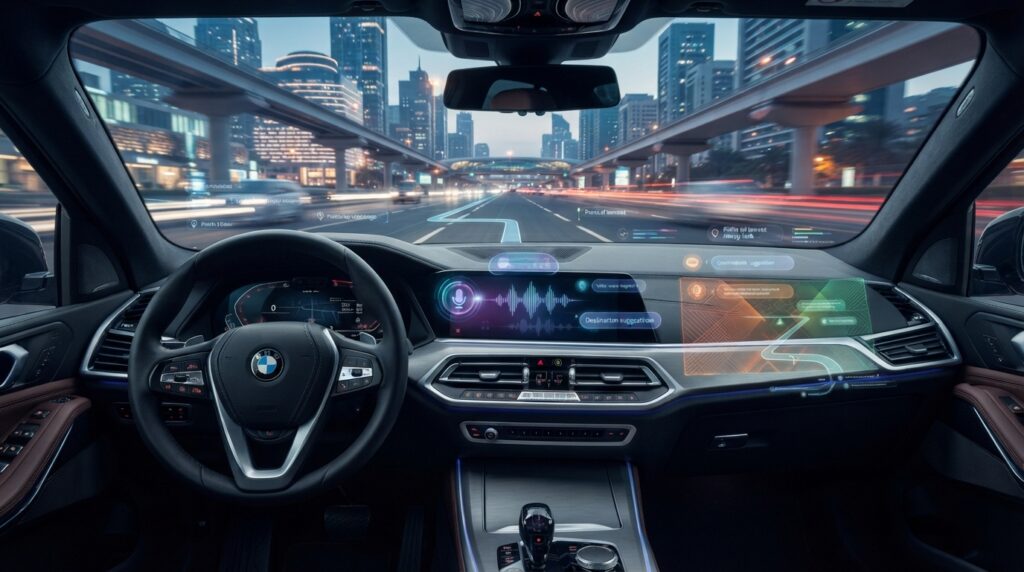
Google’s Gemini is increasingly integrated into the Android ecosystem, giving Android users access to more conversational interactions with their devices.
For drivers, the advantage isn’t simply having an AI assistant. The more useful feature is the ability to understand requests expressed naturally.
Instead of giving a short, rigid voice command, a driver may be able to ask a more conversational question about a destination, route, or task.
This could make voice interaction more practical because drivers don’t need to remember exact commands.
Apple is also working to improve Siri and its broader AI capabilities. The company has been developing new AI-powered features that are expected to make its assistant more capable across its devices and services.
However, Apple’s next generation of AI features is still evolving, meaning the comparison could look different as new software updates arrive.
For now, Google’s AI integration gives Android Auto an interesting advantage, particularly for users who regularly use Gemini.
App Support Is Different
Both Android Auto and CarPlay support popular categories of applications, including navigation, music, podcasts, messaging, and communication.
However, the selection and level of access can differ.
Google’s approach generally provides developers with more flexibility, while Apple maintains tighter control over which applications can integrate with CarPlay and what those applications are allowed to do.
This is partly about safety. A car’s display cannot behave like a normal smartphone screen because drivers need to keep their attention on the road.
Both companies therefore place restrictions on applications that could create unnecessary distractions.
Android’s more open approach can nevertheless be attractive to users who want additional customization or access to applications beyond the standard ecosystem.
CarPlay Is Still a Strong Option
Despite Android Auto’s advantages in customization and flexibility, it would be wrong to treat CarPlay as an outdated platform.
Apple has continued developing its in-car software experience, and newer versions of CarPlay are designed to provide deeper integration with the vehicle.
Apple’s approach can also be a major advantage for people who already use an iPhone, Apple Watch, AirPods, and other Apple products.
Everything is designed to work within the same ecosystem.
For someone who wants a straightforward experience without spending time changing settings, CarPlay can be an excellent choice.
The platform also benefits from Apple’s strong focus on interface consistency. Users generally know what to expect when they connect their iPhone to a compatible vehicle.
Which Platform Is Better?
There isn’t one universal answer.
Android Auto is the better choice for drivers who value customization, flexibility, and deeper access to Google’s services. It can also be more appealing to users who enjoy experimenting with settings and using Google’s AI features.
Apple CarPlay makes more sense for people who already rely heavily on the Apple ecosystem and want a simple, controlled experience in their vehicle.
The smartphone you already own will usually make the decision for you. Android Auto is designed for Android phones, while CarPlay is designed for iPhones.
That means the real choice often isn’t between two completely independent products. It’s another extension of the larger Android-versus-iPhone ecosystem.
The Future of Connected Cars
The competition between Android Auto and Apple CarPlay is becoming more interesting as cars become increasingly software-driven.
Navigation and music were once the main reasons to connect a phone to a vehicle. Now, drivers are starting to expect voice assistants, AI-powered interactions, richer displays, better connectivity, and deeper integration with the vehicle itself.
That could make the software experience just as important as the hardware inside the car.
Google and Apple are therefore competing for more than a place on the dashboard. Their platforms are becoming part of the way drivers interact with their vehicles.
As both companies continue adding AI and expanding their automotive features, the differences between the two platforms could become even more significant.
Final Thoughts
Android Auto and Apple CarPlay solve the same basic problem, but they approach it differently.
Android Auto currently stands out for its customization, flexibility, and growing AI capabilities. CarPlay remains attractive for users who prefer Apple’s controlled interface and already depend on the company’s wider ecosystem.
Neither platform is perfect for everyone.
The better choice ultimately depends on your smartphone, the features you value, and how much control you want over your in-car experience.
For now, Android Auto has the edge for users who want more flexibility, while CarPlay remains a strong option for people who prefer Apple’s simpler and more tightly integrated approach.
Source: Engadget
This Future Tech Hub article is independently written and organized using publicly available information from the sources above.