
Elon Musk has intensified his criticism of Indian billionaire Mukesh Ambani as Starlink continues to face delays in launching its satellite internet service in India. The SpaceX CEO has accused powerful business interests of standing in the way of competition, while Indian officials insist the approval process is being applied fairly.
In a post on X on Friday, Musk questioned whether Ambani would allow Starlink to compete with Reliance Jio, the telecom business owned by Ambani’s Reliance Industries. Musk argued that satellite internet could connect underserved communities, expand educational opportunities for children, and help small businesses reach customers beyond their local markets.
His latest remarks mark another escalation in a dispute over Starlink’s entry into one of the world’s largest internet markets.
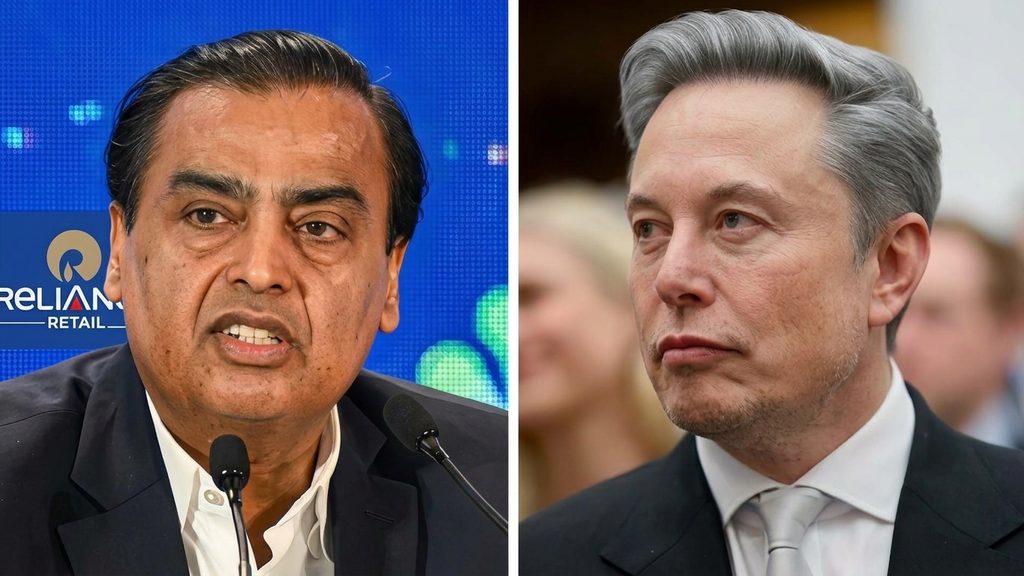
Musk Accuses Ambani of Protecting Reliance Jio
Musk has increasingly suggested that established telecom operators are trying to protect their market positions as Starlink seeks permission to begin commercial operations in India.
Earlier this week, he alleged that influential business figures were obstructing the launch to defend their own interests. He subsequently questioned Ambani’s influence over Indian policymaking, drawing a public response from the country’s Ministry of Communications.
The ministry rejected claims that Starlink was being unfairly treated, saying India’s regulatory framework for satellite communications was fair and non-discriminatory. On Friday, Telecom Minister Jyotiraditya Scindia also pushed back against the monopoly allegations, stating that India does not permit monopolies in any sector.
Reliance Jio had not immediately responded to a request for comment, according to TechCrunch.
Why Starlink Has Yet to Launch in India
SpaceX has spent years preparing to enter the Indian market. Although Starlink secured important regulatory clearances and signed distribution agreements with Reliance Jio and Bharti Airtel in 2025, it still has not received all the approvals required to begin commercial service.
India’s communications ministry said Starlink and two other licensed satellite operators were undergoing security assessments before they could receive satellite spectrum. Officials maintained that the companies were at broadly the same stage of the regulatory process.
The assessments are a key remaining obstacle. Until the required approvals and spectrum arrangements are completed, Starlink cannot proceed with a full commercial launch in the country.
Satellite Internet Competition Is Growing
The dispute comes as several companies compete to establish satellite broadband services in India.
Reliance Jio is pursuing satellite connectivity through a joint venture with Luxembourg-based SES. Bharti Airtel, meanwhile, is a major shareholder in Eutelsat OneWeb, which is also seeking to provide satellite internet in the country.
One central disagreement has concerned how satellite spectrum should be allocated. SpaceX supported an administrative allocation process, while Reliance Jio argued that spectrum should be distributed through an auction. India ultimately chose administrative allocation.
The outcome did not end the wider competition over how satellite internet should be introduced and regulated. The government must still balance market access, security requirements, and the interests of companies seeking to provide connectivity.
Why India Matters to Starlink
India represents a major opportunity for Starlink because of its enormous population and the potential to serve communities where conventional broadband infrastructure is limited or expensive to deploy.
Satellite internet could offer another connectivity option for remote households, schools, small businesses, and other users who lack reliable terrestrial connections. However, its commercial success will depend on regulatory approval, service pricing, network capacity, and competition from existing telecom providers.
For Musk, the delay also highlights the challenges of expanding SpaceX’s businesses into a market shaped by domestic regulations and powerful established operators.
Tesla has faced its own difficulties in India. After entering the market in 2025, the electric vehicle company recorded just 699 vehicle registrations during its first 12 months of deliveries, according to figures cited by Electrek. High import duties contributed to prices that were substantially above comparable U.S. prices, even after Tesla introduced price reductions.
Starlink’s India Launch Remains Uncertain
Despite the public dispute, Starlink’s immediate challenge remains completing the regulatory process needed to begin operations. Indian officials deny that the company is being singled out, while Musk continues to question whether established business interests are limiting competition.
The outcome could shape the future of satellite broadband in India, a market where connectivity demand is enormous and multiple providers are seeking a foothold.
India’s telecom minister has also rejected Musk’s claims, insisting that the country does not allow monopolies in any sector, according to Reuters’ report on India’s response to Musk’s allegations.
For now, Starlink’s commercial launch remains on hold. Whether the disagreement leads to faster approvals or further public confrontation will depend on the regulatory process and the decisions made by Indian authorities.
Stay Ahead With Future Tech Hub
Technology moves fast. We keep you ahead with the latest AI, technology, cybersecurity, software, and gadget news.