
The Xiaomi 18 Fold is Xiaomi’s latest attempt to make foldable phones more practical without sacrificing flagship-level hardware. Unveiled at IFA 2026, the new foldable combines a 7.68-inch inner display with a 5.38-inch outer screen, a new XRING 03 processor, a large silicon-carbon battery, and a Leica camera system.
The company describes it as its first “mid-size” foldable, and its unusual proportions immediately set it apart from more traditional book-style foldables. Xiaomi is also putting significant emphasis on the phone’s display technology, battery capacity, cameras, and its new in-house XRING 03 processor.
The Xiaomi 18 Fold was showcased at IFA, where Engadget had an opportunity to spend some hands-on time with the device.
For now, however, there is an important limitation: the Xiaomi 18 Fold is launching in China only, with no international availability announced yet.
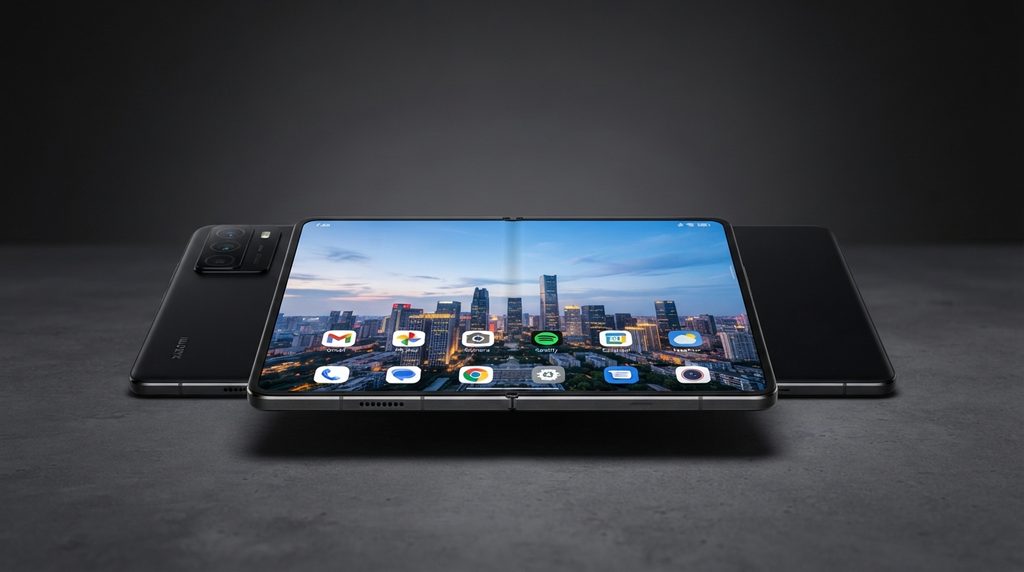
Xiaomi 18 Fold: A Different Take on the Foldable Design
The Xiaomi 18 Fold has a 7.68-inch internal display and a 5.38-inch external screen.
Rather than following the increasingly familiar tall-and-narrow design used by many book-style foldables, Xiaomi has opted for a wider, shorter shape. The company refers to the design around its A4-inspired aspect ratio, aiming to make the two displays feel more consistent when switching between them.
The result is a phone that looks noticeably different from conventional foldables.
At 219 grams, Xiaomi also claims the 18 Fold is the lightest foldable it has produced so far.
The outer display has another unusual design detail. Its corners are asymmetric, with rounded corners on one side and squared-off corners near the hinge. It is a small design decision, but it gives the phone a distinctive appearance.
The model shown at the IFA showcase was finished in red, and that color may end up being one of the phone’s most recognizable visual features.
Both Displays Get Serious Hardware
Xiaomi has equipped both screens with its new HyperRGB display technology.
The company says the panels use a full RGB subpixel structure and can reach up to 4,000 nits of peak brightness. Both displays also support an adaptive refresh rate ranging from 1Hz to 120Hz using LTPO technology.
That combination should allow the displays to remain smooth when necessary while reducing power consumption during less demanding tasks.
The phone also uses Xiaomi’s Shield Glass 3.0 protection and a reinforced aluminum alloy frame.
During hands-on testing, the new hinge reportedly felt solid, with Xiaomi using a three-link hinge design that wraps around the display.
The 18 Fold is somewhat thicker than Samsung’s Galaxy Z Fold 8, but Xiaomi has another advantage that could make the extra thickness worthwhile: battery capacity.
Xiaomi Is Bringing Its Own Chip to the Foldable
One of the biggest developments inside the Xiaomi 18 Fold is not something you can see from the outside.
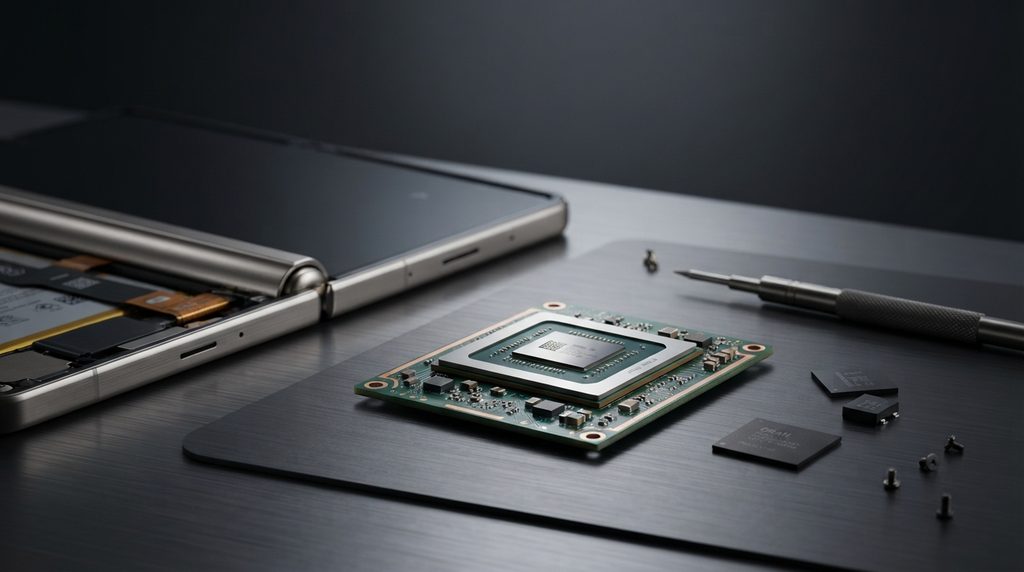
The smartphone is the first Xiaomi flagship to use the company’s new XRING 03 in-house silicon.
The chip is manufactured using a 3nm process and features a 10-core CPU alongside a 16-core GPU.
Xiaomi also says the XRING 03 is the first system-on-chip to support the latest LPDDR6 memory technology.
According to the company’s claims, its new processor delivers a 45 percent improvement in on-device NPU decoding performance compared with the previous-generation flagship processor.
That could be particularly interesting for AI-powered features that depend on processing directly on the smartphone rather than relying entirely on cloud servers.
However, performance claims from manufacturers need to be tested independently.
A longer review will be needed to determine how the XRING 03 performs under sustained workloads, how efficiently it handles demanding applications, and how it compares with processors from Qualcomm, MediaTek, and Samsung.
Xiaomi says the XRING 03 delivers a significant improvement in on-device NPU performance compared with its previous-generation flagship processor. This type of on-device processing is increasingly important as machine learning models are used directly on smartphones for tasks such as image processing, voice recognition, and other AI-powered features.
A Large Battery for a Foldable
Battery life is one area where Xiaomi appears to be taking an aggressive approach.
The Xiaomi 18 Fold uses a silicon-carbon battery that Xiaomi describes as the largest-capacity battery currently available in a foldable form factor.
The company has not only focused on capacity. The phone also supports up to 67W wired charging and 50W wireless charging with compatible hardware.
A larger battery could be particularly valuable in a foldable because the device has two displays and powerful hardware to keep running.
The trade-off is that the larger battery contributes to the phone’s thicker profile.
Leica Cameras on a Foldable
Xiaomi is also giving the 18 Fold a substantial camera system rather than treating photography as an afterthought.
The phone features a Leica-branded triple-camera setup, including a 200-megapixel main camera with a 1/1.56-inch sensor.
It is joined by a 50-megapixel Leica periscope telephoto camera.
There was not enough time during the hands-on preview to properly evaluate the camera system, so image quality remains one of the major areas that will need more testing.
The main camera sensor is also smaller than the one used in Xiaomi’s 17 Ultra, meaning the impressive 200MP specification does not necessarily tell the whole story about photographic performance.
Real-world testing will be more important than the megapixel count.
Durability Remains a Question
Foldable phones have improved considerably in recent years, but durability remains one of the biggest concerns surrounding the category.
Xiaomi says the 18 Fold uses a new-generation hinge and a stronger aluminum alloy frame, while both displays receive Shield Glass 3.0 protection.
However, Xiaomi has not provided an IP rating for the device.
That omission is notable because water and dust resistance has become an increasingly important differentiator among premium foldable smartphones.
Without an official IP rating, buyers will need to remain cautious about exposing the phone to water or other environmental hazards.
A Ceramic Version Is Also Planned
Xiaomi is teasing a special edition of the 18 Fold that uses silicon nitride ceramic.
According to Xiaomi, the material is designed to provide improved resistance to bumps and scratches while weighing around 50 percent less than traditional zirconia ceramic.
The special edition was not available for hands-on testing at the IFA showcase, however.
The standard model will be offered in red, black, and white.
The red version in particular gives the phone a more distinctive appearance than the relatively conservative finishes common among foldable smartphones.
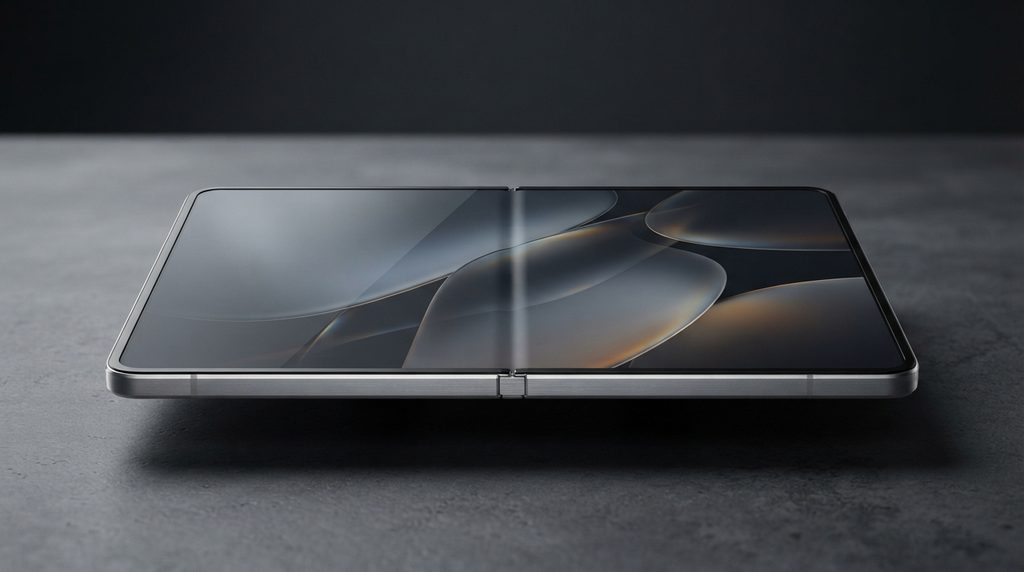
Xiaomi 18 Fold Price and Availability
The Xiaomi 18 Fold starts at 10,999 yuan, which is roughly $1,640 based on the reported conversion.
For now, the smartphone is officially limited to China.
Xiaomi has not announced international availability, meaning buyers outside China will have to wait for confirmation about whether the company plans to expand the device to additional markets.
That could be particularly important for Xiaomi because the global foldable market is becoming increasingly competitive.
Samsung continues to dominate much of the international market, while companies such as Google, Huawei, Honor, Oppo, and others are also competing with increasingly sophisticated foldable designs.
Xiaomi 18 Fold vs Traditional Foldables
The most interesting thing about the Xiaomi 18 Fold may not be its processor or camera specifications.
It is the approach Xiaomi has taken to the form factor.
Many book-style foldables are designed to provide a tall outer display that behaves like a conventional smartphone when closed. Xiaomi is moving toward a wider, more compact shape that is closer to a small tablet when unfolded while remaining relatively compact when closed.
That could appeal to people who find conventional foldables too narrow on the outside.
The downside is that Xiaomi has had to accept a somewhat thicker body.
Whether that trade-off makes sense will ultimately depend on how the phone feels during everyday use.
The Bigger Story Behind the Xiaomi 18 Fold
The Xiaomi 18 Fold arrives at an interesting moment for the foldable smartphone market.
Manufacturers are no longer simply trying to prove that foldable screens work. The competition is increasingly about making foldables thinner, lighter, more powerful, more durable, and more practical for everyday use.
Xiaomi’s decision to develop its own processor also makes the 18 Fold particularly interesting.
The XRING 03 gives Xiaomi greater control over an important part of its hardware platform and could become a significant component of the company’s future flagship strategy.
At the same time, the device’s large battery, Leica camera system, high-brightness displays, and distinctive form factor show that Xiaomi is trying to compete on more than just price.
Final Thoughts
The Xiaomi 18 Fold is an interesting addition to the growing foldable smartphone market.
Its compact design, 7.68-inch internal display, high-brightness HyperRGB panels, large battery, Leica camera system, and new XRING 03 processor give it a serious flagship specification sheet.
The unusual shape may ultimately be its biggest selling point.
Instead of simply copying the design of established book-style foldables, Xiaomi is experimenting with a wider and shorter approach that could make the device more comfortable to use when closed while providing a large screen when opened.
There are still important questions surrounding camera performance, long-term durability, the lack of an announced IP rating, and the real-world performance of Xiaomi’s new processor.
For now, the biggest limitation is availability. The Xiaomi 18 Fold is launching in China, and Xiaomi has not confirmed a wider international release.
If the company eventually brings this design to more markets, it could become one of the more interesting alternatives to the established foldable phones from Samsung and other major manufacturers.
Source: Engadget