
Artificial intelligence has made it easier than ever to create realistic digital content. A few years ago, producing a convincing fake video or synthetic voice required specialized equipment and technical expertise. Today, AI tools can generate or modify media with surprisingly little effort.
This technology is commonly known as AI deepfakes.
Deepfakes can make a person appear to say something they never said, create a voice that sounds like a real individual, or alter existing video and images. While the technology has legitimate applications in entertainment, education, accessibility, and creative work, it also creates serious risks involving scams, misinformation, fraud, and privacy.
Understanding the technology behind deepfakes is becoming increasingly important as synthetic media becomes harder to distinguish from authentic content.
What Are AI Deepfakes?
AI deepfakes are digitally manipulated or generated videos, images, or audio created using artificial intelligence.
The term originally became associated with techniques that used machine learning to replace or recreate faces in videos. The technology has since expanded significantly.
Modern generative AI systems can create:
- Realistic synthetic voices
- Face-swapped videos
- AI-generated photographs
- Lip-synced videos
- Altered facial expressions
- Completely synthetic people and characters
- Fake audio recordings
- Digitally modified real-world footage
The result can look or sound remarkably convincing, especially when viewed on a small screen or through social media compression.
The Technology Behind Deepfakes
Several AI techniques can be used to produce synthetic media.
Generative AI Models
Generative AI models learn patterns from large amounts of data and can use those patterns to create new content.
For example, an AI system trained on human speech can learn characteristics such as pronunciation, rhythm, tone, and vocal patterns. It can then generate new speech that resembles a particular voice.
Image and video models use similar principles to generate or modify visual content.
Neural Networks
Deepfakes rely heavily on neural networks, a type of machine-learning system designed to identify patterns in data.
During training, these systems can analyze large collections of images, video frames, or audio recordings. The model learns characteristics that allow it to reproduce or manipulate content.
The more capable the underlying model becomes, the more realistic the generated result can be.
Face Swapping
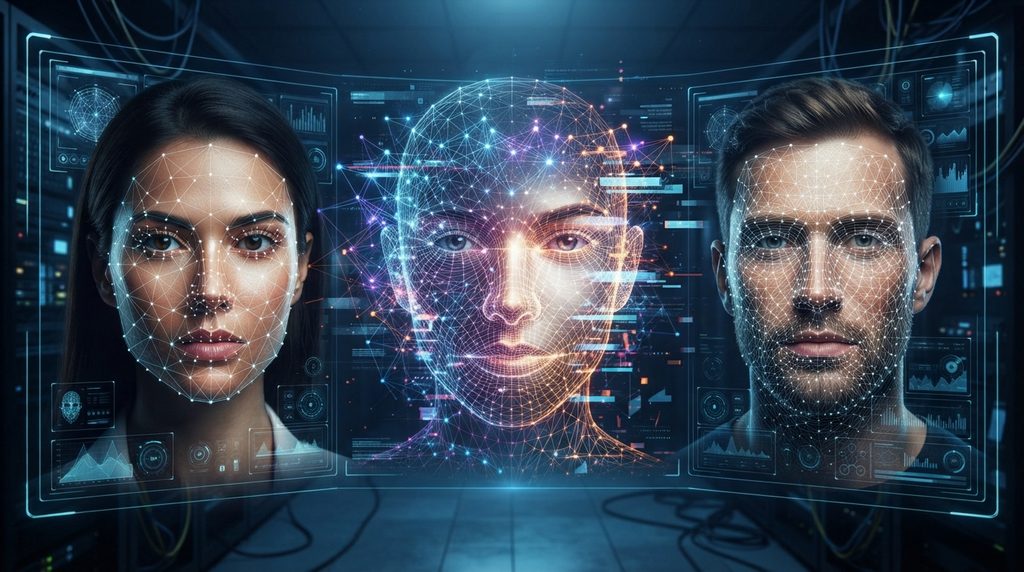
Face-swapping systems analyze facial features from one person and apply them to another person’s video.
The system must account for factors such as:
- Facial shape
- Head movement
- Lighting
- Skin texture
- Facial expressions
- Camera angle
Modern systems can perform these transformations much more smoothly than older editing software.
Voice Cloning
AI voice cloning works by analyzing recordings of a person’s speech.
A sufficiently capable system can learn characteristics of the speaker’s voice and generate new speech based on text or other instructions.
This has legitimate uses. For example, synthetic voices can support accessibility tools, localization, and entertainment.
However, criminals can also use voice cloning to impersonate family members, employees, executives, or other trusted individuals.
Why Deepfakes Can Look So Real
Older forms of manipulated media often contained obvious visual problems.
Faces could look distorted, movements might appear unnatural, or lighting could be inconsistent.
AI-generated media has improved considerably.
Modern systems can reproduce small details such as facial movements, skin texture, lighting changes, and speech patterns. At the same time, improvements in hardware and software make generation faster and more accessible.
Another factor is the quality of the source material.
A high-quality photograph, clear voice recording, or well-lit video can provide an AI system with more information to work with.
This means that content appearing on social media is not automatically trustworthy simply because it looks or sounds realistic.
AI Deepfakes and Online Scams
One of the biggest concerns surrounding deepfakes is fraud.
Scammers can combine deepfake technology with traditional social engineering techniques to create convincing impersonation attacks.
For example, an attacker might use a cloned voice to imitate a company executive and request an urgent payment.
Another attack could involve a fake video call or manipulated audio designed to convince an employee that they are communicating with someone they know.
Deepfakes can therefore become another tool inside a larger cybersecurity attack rather than being the attack itself.
This is particularly important for businesses because employees may traditionally rely on a person’s voice or appearance as evidence of identity.
Researchers are also developing technologies to identify AI-generated content and establish the origin of digital media. Google DeepMind, for example, has developed SynthID to help identify AI-generated content.
That assumption is becoming less reliable.
Deepfakes and Misinformation
Deepfakes can also be used to spread false information.
A manipulated video of a politician, business leader, celebrity, or public figure can potentially reach millions of people before its authenticity is questioned.
The problem becomes more serious when users share content without checking its original source.
Even when a deepfake is eventually exposed, the false information may already have influenced public opinion.
This is sometimes described as the “liar’s dividend.”
As synthetic media becomes more common, people may also begin dismissing genuine recordings as fake.
That creates a difficult environment where both fake and authentic information can be questioned.
Signs That a Video or Voice May Be AI-Generated
There is no single visual clue that can reliably identify every deepfake.
However, several warning signs can help.
Look for:
- Unnatural facial movements
- Strange blinking or eye movement
- Inconsistent lighting
- Distorted teeth or facial features
- Audio that does not perfectly match the speaker
- Unusual pronunciation or speech rhythm
- Background elements that appear distorted
- Sudden changes in image quality
- Missing or suspicious original sources
Audio deepfakes can be even more difficult to identify.
A cloned voice may sound convincing while still containing subtle differences in pacing, pronunciation, or emotional expression.
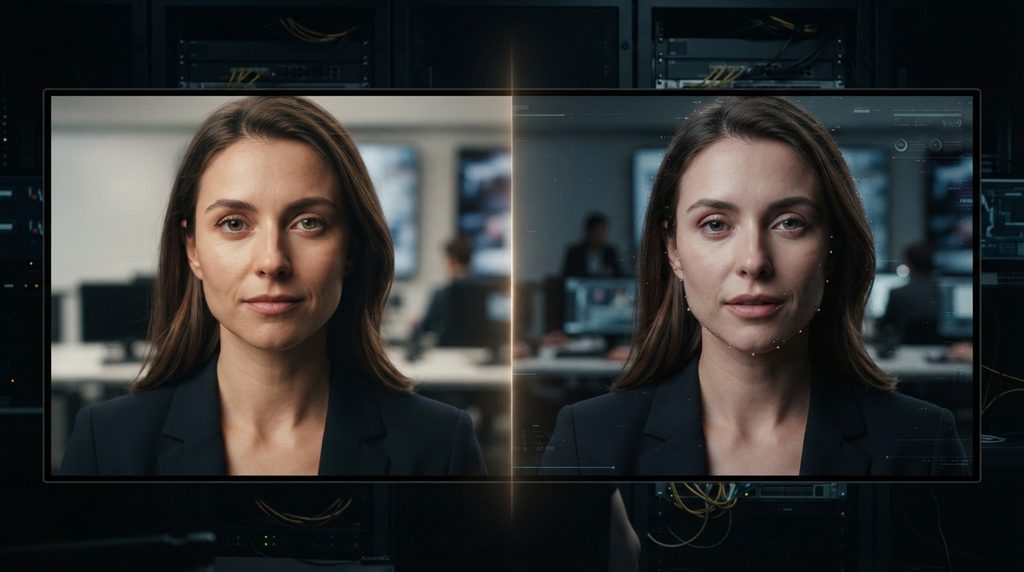
For important information, visual or audio quality alone should never be treated as proof of authenticity.
Protecting Yourself From Deepfake Scams
The most effective defense is not trying to become an expert at spotting AI-generated media.
Instead, focus on verification.
If someone sends an urgent request involving money, passwords, account access, or sensitive information, verify the request through another communication channel.
For example, if someone supposedly calls asking for an urgent payment, contact that person using a phone number you already trust.
Businesses should also establish procedures that prevent a single voice call or video message from authorizing sensitive transactions.
Additional protections include:
- Avoiding impulsive reactions to shocking videos
- Checking the original source of suspicious content
- Comparing important claims with reputable news sources
- Using multi-factor authentication
- Training employees to recognize impersonation attacks
- Confirming financial requests through established procedures
- Avoiding sharing unnecessary voice recordings publicly
These practices remain useful even when the technology behind an attack changes.
AI Deepfakes and Cybersecurity
Deepfakes are becoming part of a broader AI security problem.
Attackers can combine generative AI with phishing, social engineering, malware, and identity theft.
For example, an attacker could use AI to generate a convincing email, clone an executive’s voice, and then use both as part of the same attack.
This makes cybersecurity awareness increasingly important.
Deepfakes are becoming part of a broader AI security problem. Attackers can combine generative AI with phishing, social engineering, malware, and identity theft. For a broader look at the security implications of artificial intelligence, see our article How AI Is Changing Cybersecurity.
You can also connect this topic with your article about email account compromises, since deepfake-enabled impersonation can be used alongside compromised accounts.
The Future of Deepfake Detection
Technology is developing on both sides of the problem.
As generative AI improves, researchers and technology companies are developing systems designed to detect manipulated content.
Detection methods can analyze:
- Video frames
- Audio characteristics
- Metadata
- Compression patterns
- Facial movements
- Digital signatures
- Content provenance
Another important development is content credentials and provenance.
Instead of only asking whether something looks fake, provenance systems can provide information about where content came from and whether it has been modified.
This could eventually become an important part of digital media verification.
Deepfakes Are Not Always Malicious
It is important to remember that deepfake technology itself is not inherently harmful.
Synthetic media can have legitimate applications in:
- Film production
- Video games
- Education
- Accessibility
- Voice restoration
- Language localization
- Creative projects
- Virtual characters
The problem arises when people use the technology for deception, fraud, harassment, or manipulation.
As with many technologies, the potential benefits and risks depend heavily on the way the technology is used.
Stay Ahead With Future Tech Hub
Technology moves fast. We keep you ahead with the latest AI, technology, cybersecurity, software, and gadget news.