
GitHub Agent Apps are expanding how developers can manage software delivery workflows directly within GitHub. GitHub is introducing new agent apps that connect external development and software delivery services to the platform.
Developers often have to move between multiple platforms while taking a feature from an initial idea to production. Product analytics, dependency security, feature flags, and deployment monitoring can all require separate tools.
GitHub’s new agent apps are designed to reduce that context switching by allowing external services to work directly within GitHub.
According to GitHub, the apps use the same platform and harness as its Copilot cloud agent, allowing developers and AI agents to coordinate tasks without constantly moving between different applications.
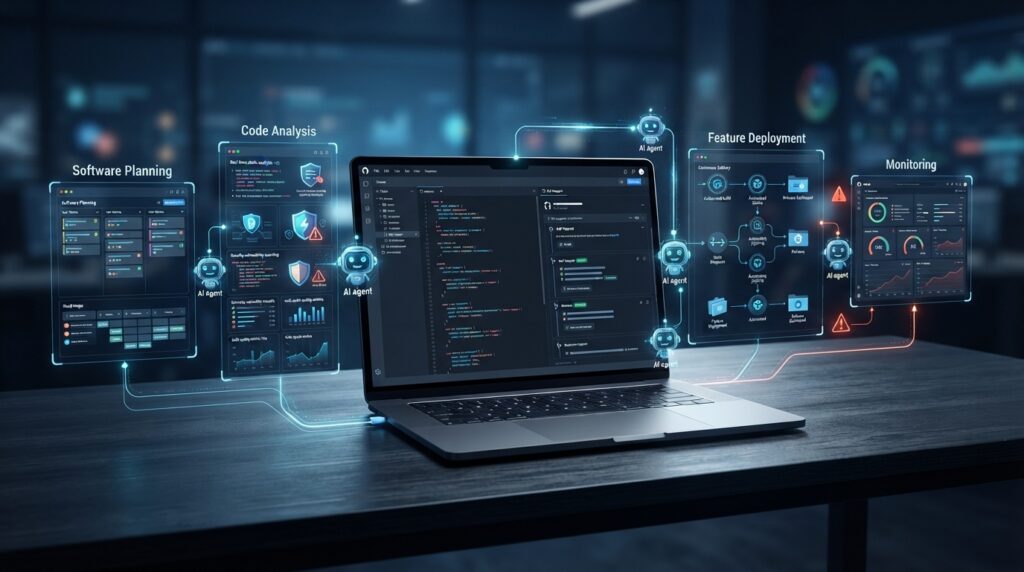
What Are GitHub Agent Apps?
GitHub agent apps connect external development and software delivery services to GitHub.
GitHub Agent Apps can give developers access to specialized services without leaving their existing development workflow.
For development teams, GitHub Agent Apps could make AI-assisted software delivery more connected and efficient.
Instead of opening another application to investigate a problem or perform a task, developers can interact with an agent from areas such as the Agents tab or pull request comments.
GitHub’s initial examples include integrations with services such as Amplitude, Endor Labs, LaunchDarkly, and PagerDuty.
The goal is to bring the information and actions provided by these services into the same workflow where developers are already reviewing and building software.
Using Agents Before Writing Code
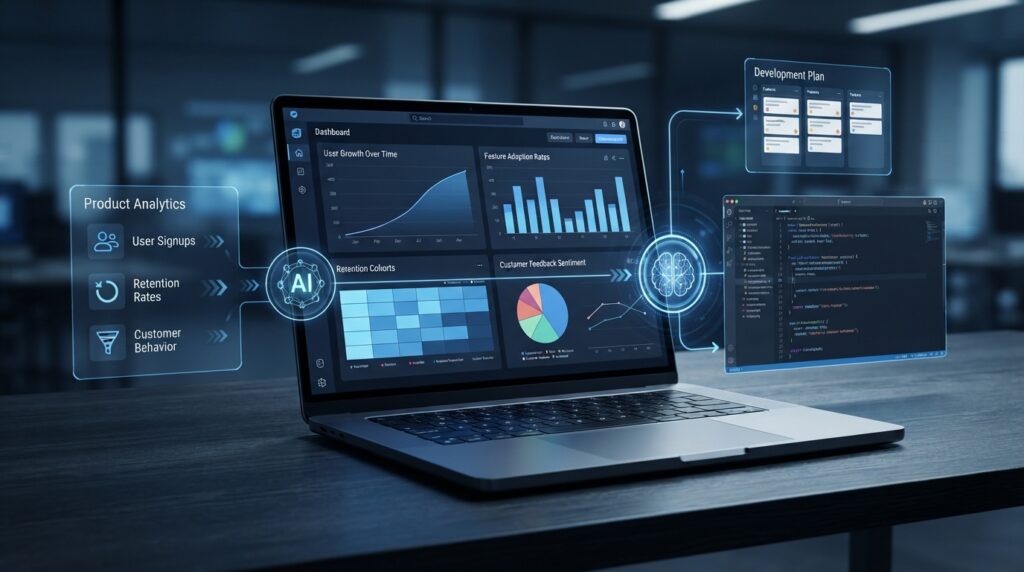
One example from GitHub shows how an agent could help developers determine whether a proposed product change is actually worthwhile before they start coding.
Suppose a company believes that a particular onboarding step is causing users to abandon the signup process.
Instead of manually opening an analytics platform and building a separate report, a developer could ask an Amplitude agent from within GitHub to investigate whether completing that step is actually associated with better user retention.
The resulting information could help the development team decide whether the original feature request needs to be changed before any code is written.
This gives developers a way to use product data earlier in the software development process.
Security Checks During Development
Agent apps can also bring security checks closer to the development workflow.
GitHub’s example uses an Endor Labs agent to examine dependencies being changed in a pull request.
Rather than waiting for a later automated scan to identify a problem, developers can ask the agent to investigate the dependencies while reviewing the proposed change.
AI-powered security tools are becoming increasingly important as software development workflows become more automated.
The agent can check for known vulnerabilities and other package risks and report its findings directly in the pull request.
This approach could help development teams identify dependency problems earlier, when changes are still being reviewed.
Managing Feature Rollouts
Feature releases can also require coordination between code and deployment tools.
GitHub demonstrates how a LaunchDarkly agent can be used to create a feature flag and connect it to code through a pull request.
This can allow developers to control how a new feature is introduced to users rather than immediately making it available to everyone.
For example, a feature could initially be released internally before gradually expanding to a larger percentage of users.
GitHub also notes that environments requiring approval can still require a human decision before targeting changes are applied.
That human approval is important because the agent can assist with the workflow without automatically making every production decision.
Checking Deployment Risk Before Release
The final example involves PagerDuty and deployment risk.
Before merging a pull request, developers can ask the PagerDuty agent to examine the current operational state of a service.
The agent can check for active incidents, review recent incident history, and compare the changes in a pull request with areas involved in previous incidents.
This gives developers additional context before deciding whether a deployment should proceed.
The idea is to make operational risk assessment a normal part of the development workflow rather than something teams only investigate when a release already appears risky.

GitHub Wants Developers to Stay in One Workflow
The bigger idea behind agent apps is not necessarily replacing the tools developers already use.
GitHub says developers can continue using services such as Amplitude, LaunchDarkly, Endor Labs, and PagerDuty while bringing their capabilities into GitHub.
Instead of constantly switching between applications, developers can access those services from the GitHub environment where they are already working.
This could reduce context switching and make it easier for developers to bring information from different parts of the software delivery process into a single workflow.
Other Agent Apps Are Also Available
GitHub says agent apps are available through the GitHub Marketplace.
The initial group of integrations includes several different types of software development tools.
GitHub highlights agent apps from companies including Miro, Bright Security, SonarQube, Octopus Deploy, and Packfiles.
These agents can support different parts of the software development lifecycle, including planning, visual collaboration, security testing, code quality, migration planning, and deployment troubleshooting.
What This Means for Software Development
AI coding assistants have increasingly moved beyond simply generating pieces of code.
GitHub’s agent app approach points toward a broader role for AI agents in software development, where agents can help developers gather information, analyze changes, interact with external services, and coordinate tasks across different stages of development.
The important part is that developers can remain involved in reviewing changes and making decisions.
Rather than replacing the existing software tools, agent apps are designed to connect those tools to the development workflow.
For teams already using GitHub and multiple software delivery platforms, this could make development workflows more centralized and reduce the amount of time spent switching between different applications.
The Future of AI-Powered Development Workflows
GitHub’s agent apps show how AI is becoming increasingly integrated into the wider software development lifecycle.
The next stage of AI-assisted development may involve more than writing code. Agents could increasingly help teams research requirements, evaluate dependencies, manage releases, investigate incidents, and perform security checks.
However, organizations will still need to decide how much authority AI agents should have, particularly when they can make changes to code, infrastructure, or production systems.
For now, GitHub’s approach combines AI assistance with existing development tools while keeping developers involved in the workflow.
As more services become available as agent apps, the development environment could become increasingly centralized around GitHub.
Source
GitHub — How to bring your software delivery workflow into GitHub with agent apps
https://github.blog/ai-and-ml/github-copilot/how-to-bring-your-software-delivery-workflow-into-github-with-agent-apps/